dubai
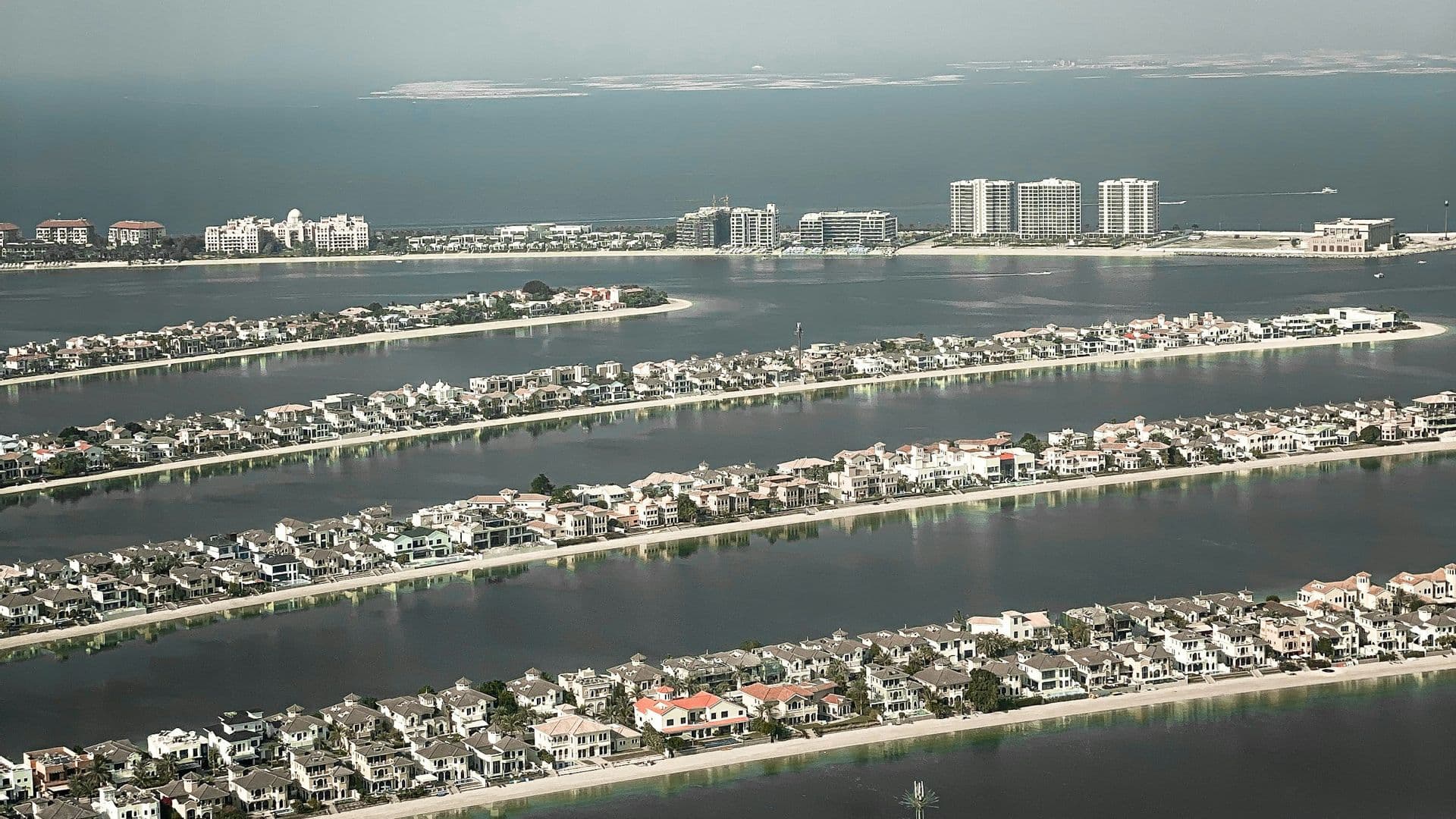
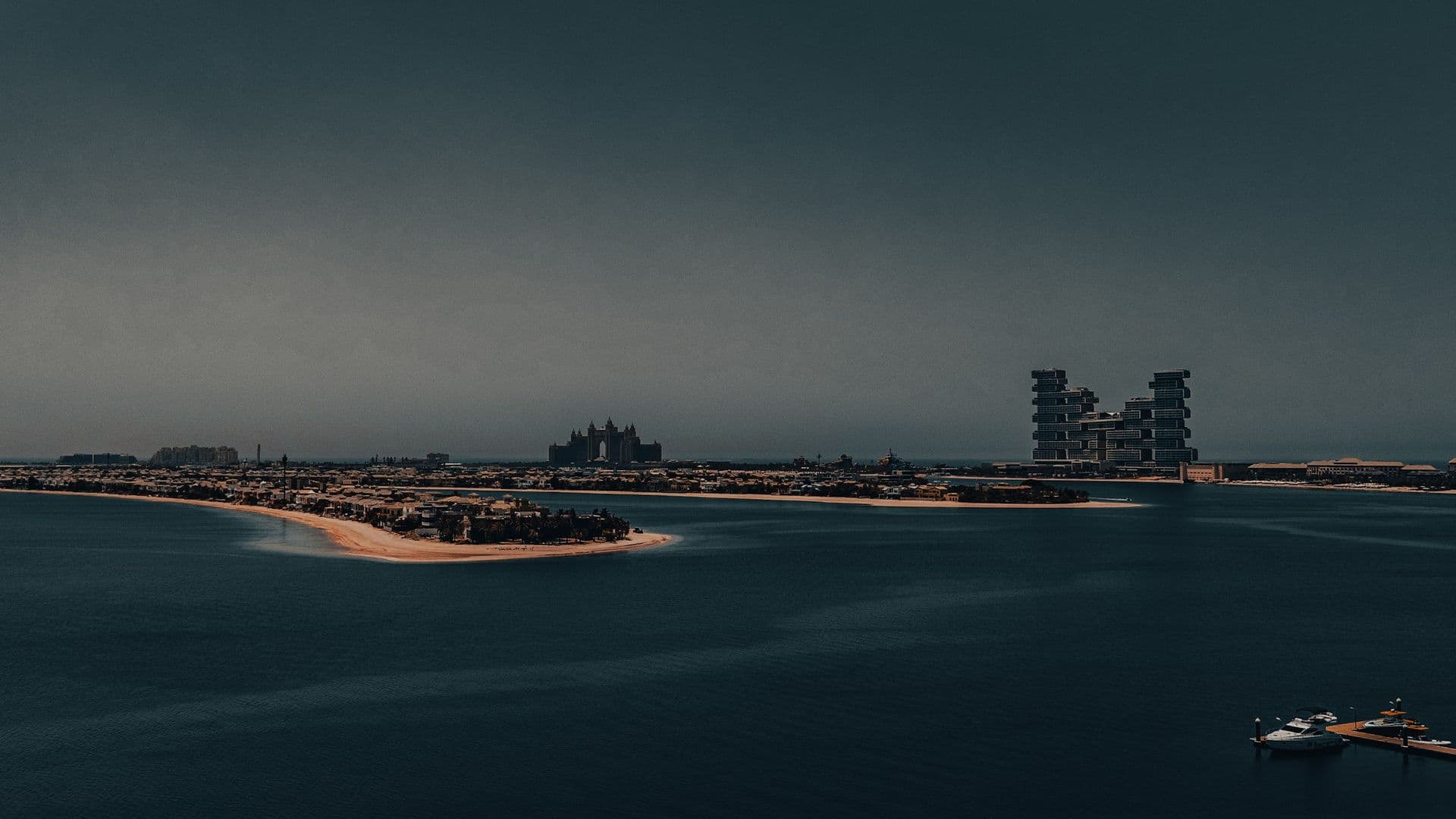
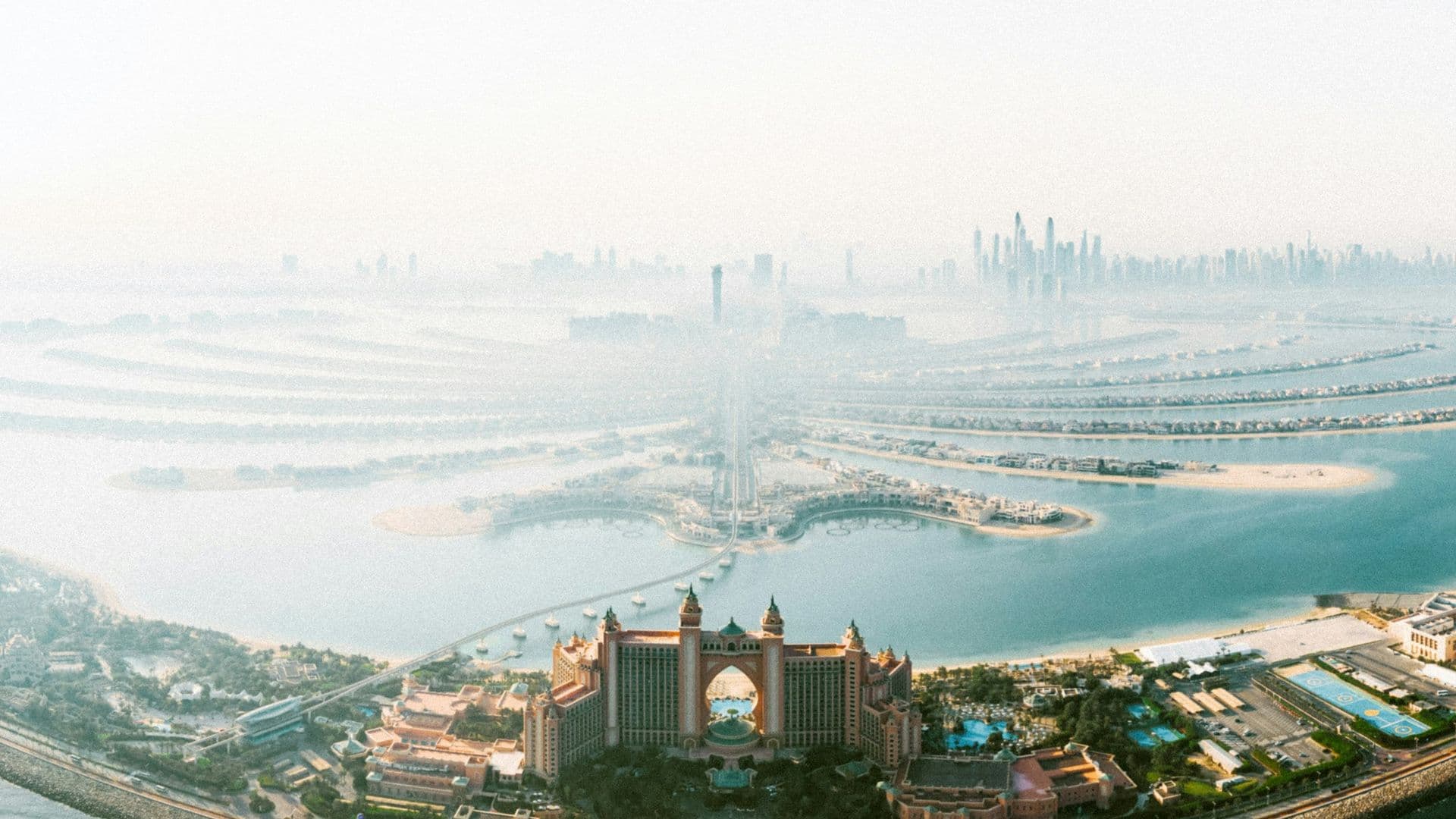
Palm Jumeirah is a man-made archipelago on Dubai's coastline, developed by Nakheel, with construction starting in 2001. It is built in the shape of a palm tree: a two-kilometre trunk lined with apartment towers, 17 fronds carrying villas, and an outer crescent that carries hotels and functions as a breakwater. The island connects to the mainland by a bridge at the base of the trunk, with the Palm Monorail running along its length.
At a glance


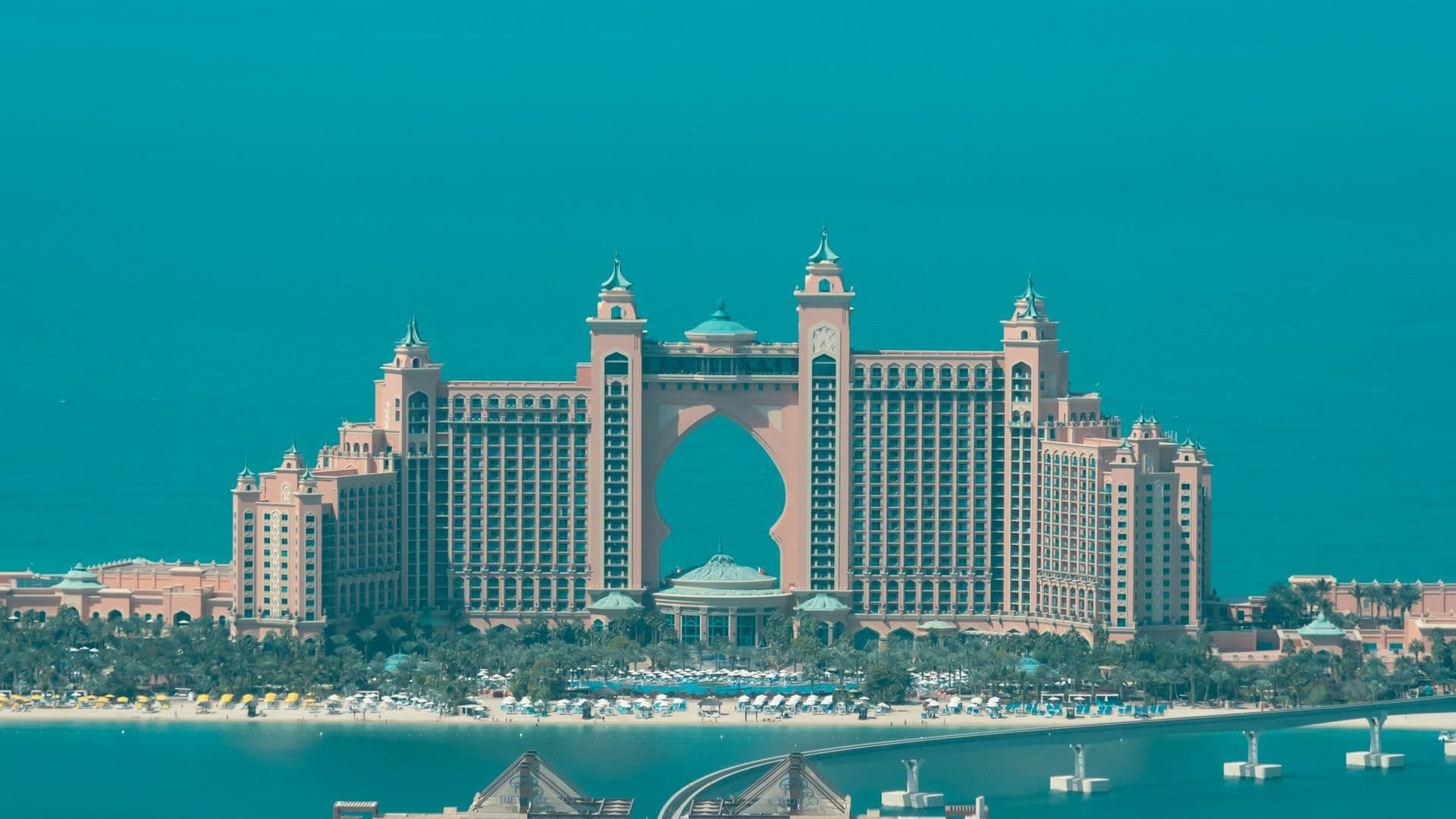
Home to about 25,000 residents, daily life on Palm Jumeirah centres on the outer crescent: beach clubs, resort hotels including Atlantis, The Palm at the island's apex, waterfront restaurants and marinas for boat owners. Al Ittihad Park, the UAE's first park built entirely with native plants, sits on the trunk. Most errands mean driving to the trunk's retail row or off the island; it suits buyers who prioritise private beach access and sea views over walk-to-everything convenience.
By road, the island connects to Sheikh Zayed Road by a single bridge at the base of the trunk, plus a six-lane sub-sea tunnel to the outer crescent near Atlantis, The Palm. The Palm Monorail, the Middle East's first monorail, runs the length of the island from Gateway station at the base to Atlantis; a footbridge links Gateway station to the Palm Jumeirah stop on the Dubai Tram, which connects to the Dubai Metro Red Line at the DMCC and Sobha Realty stations. By road, Dubai International Airport (DXB) is roughly 30 to 40 minutes away via Sheikh Zayed Road, longer at peak hours.
No full K-12 school operates on Palm Jumeirah itself. Nurseries on the island include Jumeirah International Nursery (JINS), Asya's Nursery and Blossom Nursery; the nearest full school, Dubai College, is about 3.7 km away.
NMC Royal Medical Centre, The Palm operates inside Palm Jumeirah Mall, offering family medicine, paediatrics, women's health and diagnostics, including cardiology; advanced imaging such as MRI and CT is provided through its partner hospital, NMC Royal Hospital in Dubai Investment Park.
Palm Jumeirah is one of Dubai's designated freehold areas, open to foreign ownership since 2002 under Law No. 7 of 2006 and Regulation No. 3 of 2006: a buyer of any nationality can hold full title to the unit and a proportional share of common areas, and register it with the Dubai Land Department. Dubai Land Department registration fees and other transaction costs are the same citywide, not area-specific, see our buyer costs guide for the current breakdown. Service charge is set per building by its owners' association and can run higher than on inland areas because towers share beach, marina and pool facilities; it is not published in aggregate here and should be checked for the specific unit before an offer.
No coordinates in the database yet
Republic doesn't have confirmed live listings in this area yet. The catalogue is being filled in, and real inventory will appear here as it's added.